The clearest signs your sewer line needs help:
A plumber typically diagnoses the line with a sewer camera. If they recommend replacement, the excavation is the next call.
There's open-trench and there's trenchless. Each has its place.
The traditional method: excavate a trench from the building to the connection point (city main or septic), remove the old pipe, lay new pipe to grade, bed and backfill, restore the surface.
Open-trench is the right answer when:
The newer methods — pipe-bursting or cured-in-place lining — leave most of the surface intact and only excavate at the endpoints. Less disruptive but not always cheaper, and not appropriate for every situation.
Trenchless is the right answer when:
We handle the excavation side of both. For the trenchless equipment itself we coordinate with specialty subs.
When city sewer service reaches a property that's been on septic, the homeowner often has the option (or the requirement) to abandon the septic and tie into the main. We handle:
For a typical 50-100 foot residential line on an open-trench: 1-3 working days. The trench, the pipe lay, the inspection, and the restoration each take time. Trenchless can be faster end-to-end on the right job. Bad weather or rock can extend it.
We trench, bed, and lay pipe. The plumber makes the connections at the building and at the city main or septic tank, and the inspector signs off before we backfill. We coordinate the schedule so each trade is there when needed.
Open-trench means the trench line gets disturbed. We strip the topsoil and lawn, work, and restore the area with topsoil and seed (or sod if you prefer). The disturbance is real but recoverable. Trenchless leaves most of the lawn intact but costs more.
In our area, sewer mains are typically 24-48 inches deep at the building, with slope from there to the connection point. Depth depends on the basement or crawlspace depth, the elevation of the connection, and the distance.
The "main" usually refers to the public sewer in the street. The "lateral" is the private pipe from your building to the main. Property owners are responsible for the lateral all the way to the city tap. We replace laterals.
Sewer work is permitted in every jurisdiction we work. The plumber typically pulls the permit; we coordinate with the inspector for the trench inspection before backfill.
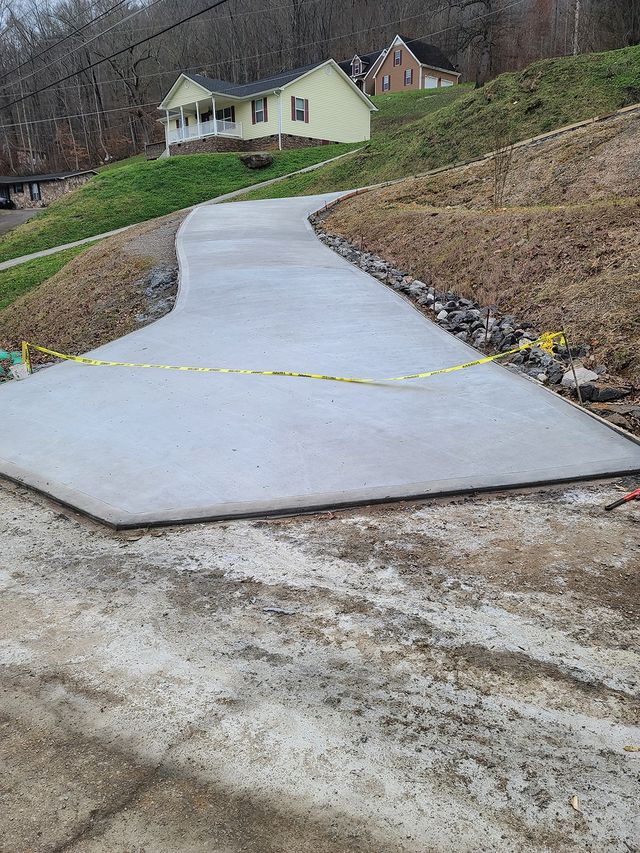
Sometimes, with trenchless. Otherwise we open-cut a strip across the driveway and patch with new concrete after the work is inspected. The patch is structural but the seam will show.
