Service

Concrete sidewalks, patios & flatwork

Driveway slabs and building floors get most of the attention, but the smaller pours — sidewalks, patios, walkways, stoops, generator pads, AC pads — are where concrete most often fails fast. The reason is almost always…

Services  /  Concrete sidewalks, patios & flatwork

What's included

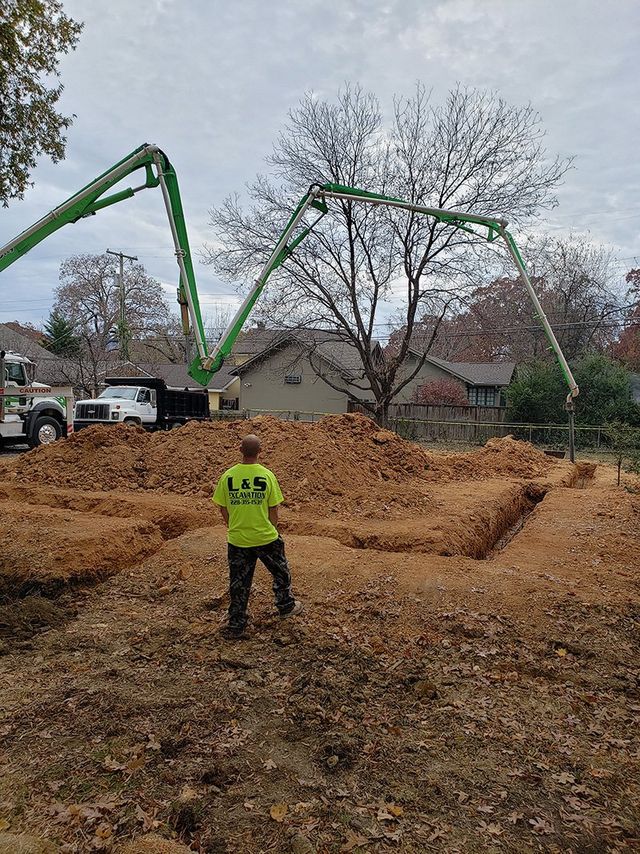
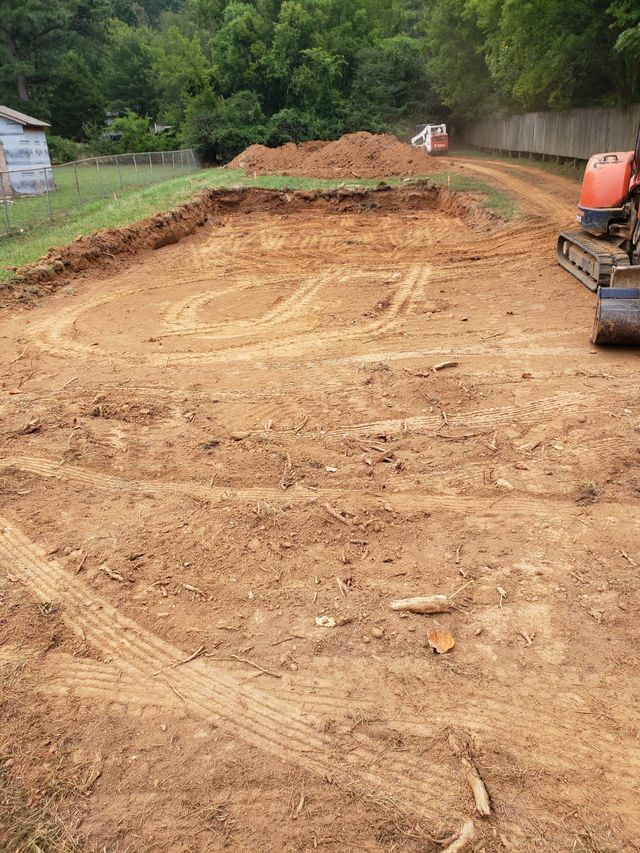
  • Site prep and excavation for the slab footprint plus a working perimeter
  • Subgrade compaction to 95% standard Proctor
  • Crushed stone base — typically 4-6 inches of #57 stone
  • Vapor barrier under heated or interior slabs
  • Forms and grade strings to set elevation and slope
  • Wire mesh or rebar sized for the slab and the loading
  • 3,000-5,000 psi concrete mix depending on the application
  • Finishing — broom, smooth trowel, salt finish, exposed aggregate, or stamped
  • Control joints cut at the right spacing
  • Cure — wet or compound depending on the season

What we pour

  • Walkways and sidewalks — typically 4 inches over compacted base, 4-foot width standard, 5 feet for ADA
  • Patios — 4 inches reinforced, expansion joints isolated from the house
  • Pool decks — slip-resistant finish, sloped away from the pool coping
  • Stoops, landings, and steps — formed to code rise/run
  • Generator pads, AC pads, hot tub pads — sized to the equipment, reinforced for point loads
  • Garage aprons — 6 inches thick with rebar for vehicle loading
  • Concrete curb and edging for landscape beds

Why flatwork cracks

Some hairline cracking is normal in any concrete. The cracks that ruin a pour are the ones that telegraph through the slab in the first year. Common causes:

  • Poor subgrade compaction — settlement under the slab pulls it down unevenly
  • Missing control joints — the slab cracks where it wants to, instead of where we planned
  • No isolation from the house or driveway — the slab and the structure move differently and tear at the joint
  • Wrong mix for the conditions — too much water in the mix in summer, not enough fly-ash in winter
  • Curing skipped — concrete that loses moisture too fast cracks in the first 28 days

We don't skip any of those.

Finishes

The finish is what people see, but it has to match the use:

  • Broom finish — standard for sidewalks and pool decks; slip-resistant
  • Trowel smooth — interior floors, garage floors, equipment pads
  • Salt finish — a textured look popular for patios
  • Exposed aggregate — washed surface that shows the stone; high-end driveways and patios
  • Stamped — patterned to look like flagstone, slate, or brick; sealed afterward
  • Color — integral colored or topical stain

We'll walk you through samples before pouring.
Concrete pad sizing for backyard equipment

Common pad sizes we pour:

  • Generator pad — 4 to 6 inches thick, 6-12 inches wider than the unit on each side, sometimes with sleeves for fuel and electrical penetrations
  • AC pad — 4 inches typically, with a level finish and isolated from the house
  • Hot tub — 6 inches reinforced, sized for the empty + full + occupied weight (often 8,000+ lbs)
  • Shed slab — 4 inches with a turned-down edge that acts as a small footing

Meta

  • Meta title: Concrete Sidewalks, Patios & Flatwork in Chattanooga, TN | L & S Excavation
  • Meta description: Concrete sidewalks, patios, walkways, and flatwork across the Greater Chattanooga area. Properly subgraded, reinforced, and finished to last.

Recent work

Service areas

Available across the Greater Chattanooga area.

FAQs

Common questions, straight answers.

How long until I can walk on a new patio?

24 hours for foot traffic in normal conditions. 72 hours for furniture. 7 days before driving on it (and only if it's designed for vehicles — most patios aren't). Full design strength is 28 days.

Do I need rebar in my patio?

Wire mesh is fine for most residential patios. Rebar makes sense for anything that takes vehicle weight or sits on poorly drained soil. We size the reinforcement to the application.

Why do you cut grooves in the concrete?

Those are control joints. They're where we want the concrete to crack when it shrinks during curing. Properly spaced, they keep the rest of the slab smooth. Skipping them is how you get a random crack across the middle of the patio.

Can you tie new flatwork into existing?

Yes — with an isolation joint. The new and old slabs don't share rebar; they move independently. That prevents the new pour from cracking when the old one shifts.

What's the difference between a patio and a pad?

Mostly thickness and reinforcement. A patio is a finished surface for people; a pad is an equipment foundation. Pads are typically thicker and more reinforced for point loads.

Can you do stamped or stained concrete?

Yes. Stamped concrete uses textured mats pressed into wet concrete; stains and integral colors are added to the mix or applied afterward. We coordinate with finish specialists for high-end decorative work.

Ready to break ground?

Let's talk about your site.

Request an estimate Free walk-through. · Written estimate. · No pressure.