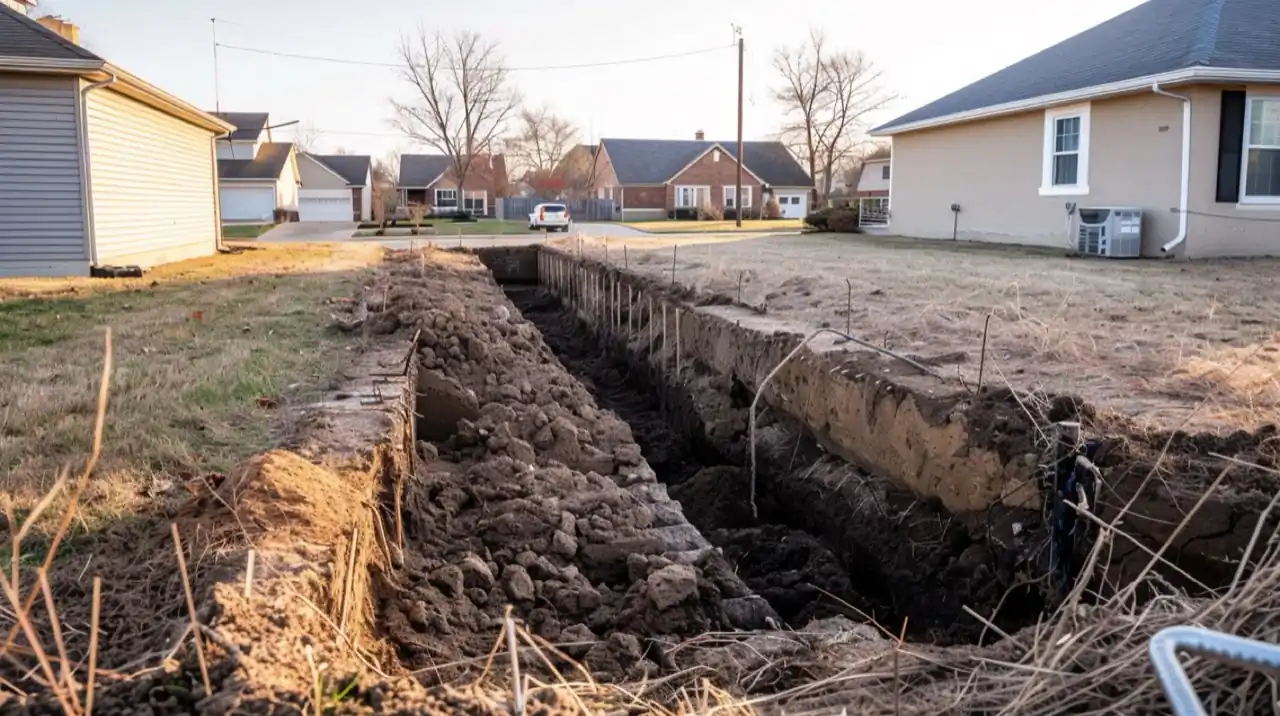
Septic systems are not optional permit jobs. In Tennessee, on-site sewage falls under TDEC; in Georgia, under the county Health Department. The permit is tied to the site and the building, and inspectors verify the system at multiple stages — tank set, lateral lines, and final cover. We coordinate those inspections as part of the scope so the work isn't blocked by a missed call.
Drain field size is dictated by two numbers:
Tighter clay soils need longer drain field lines because the soil can absorb less water per square foot. Sandier soils need less length. We design and trench to the rate that came back from the perk test — not to a guess.
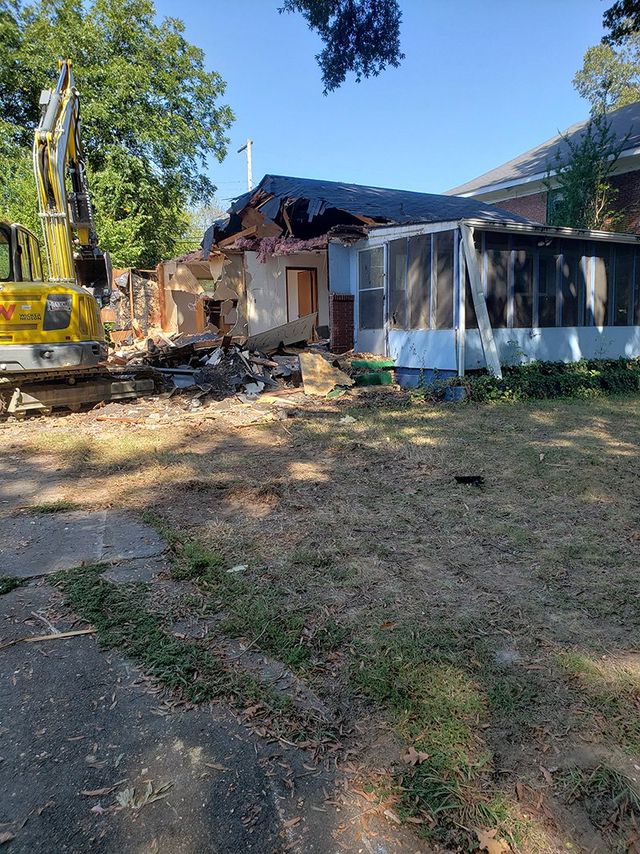
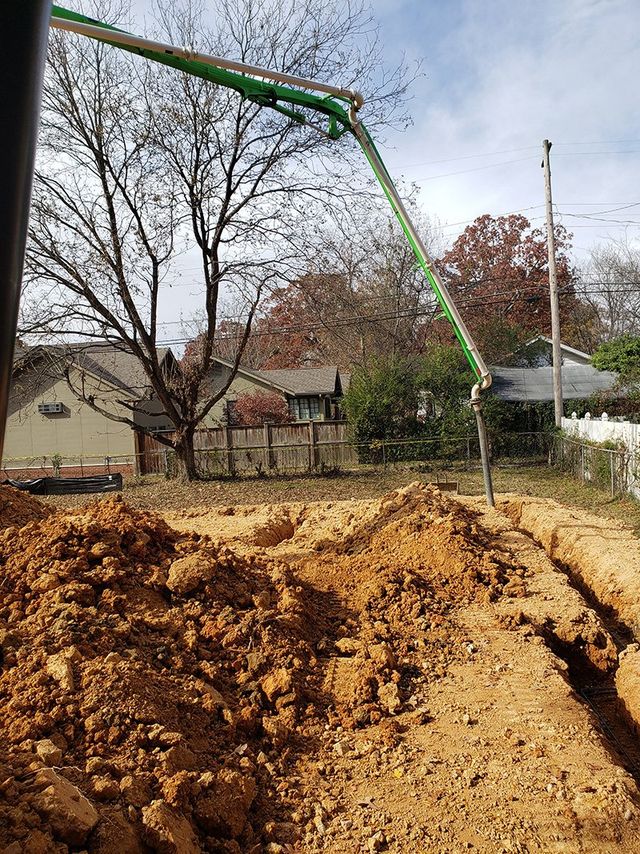
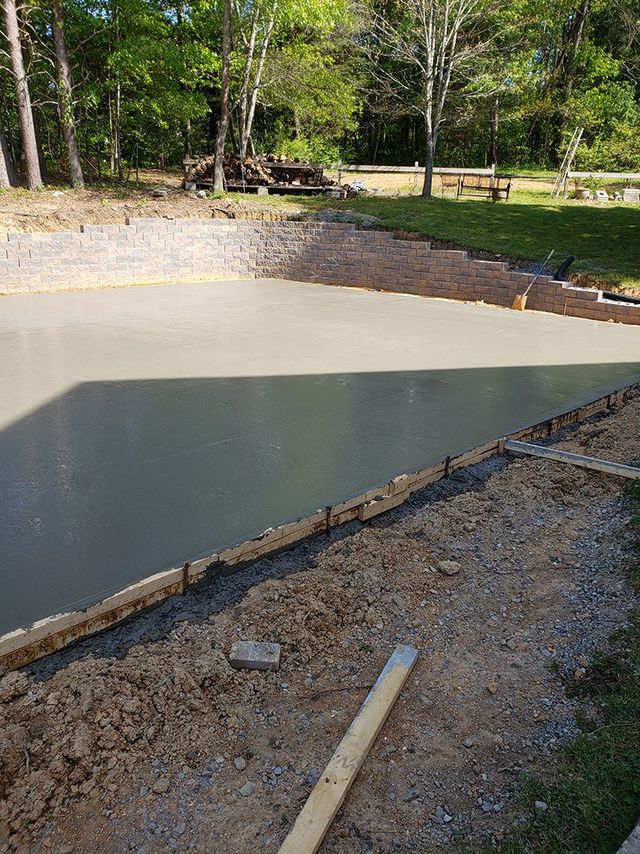
The red clays common in Catoosa and Walker County percolate slowly — perk rates of 60+ minutes per inch are routine. That doesn't mean the lot is unbuildable; it means the drain field needs to be longer or set in a sand-filter design. Lots along creek bottoms or with high seasonal water tables sometimes require mound systems or pressure-distribution designs. We work through these with the regulator before the work starts.
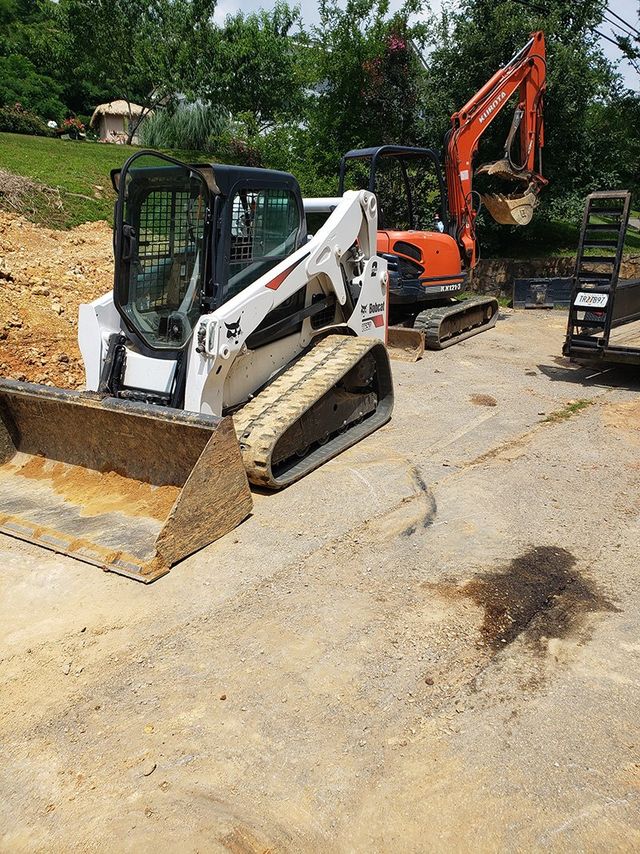
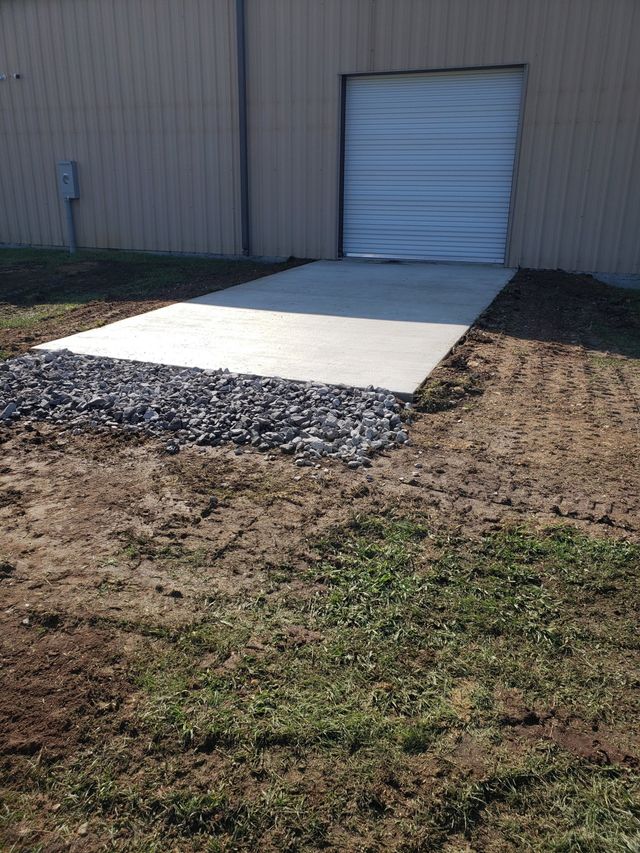
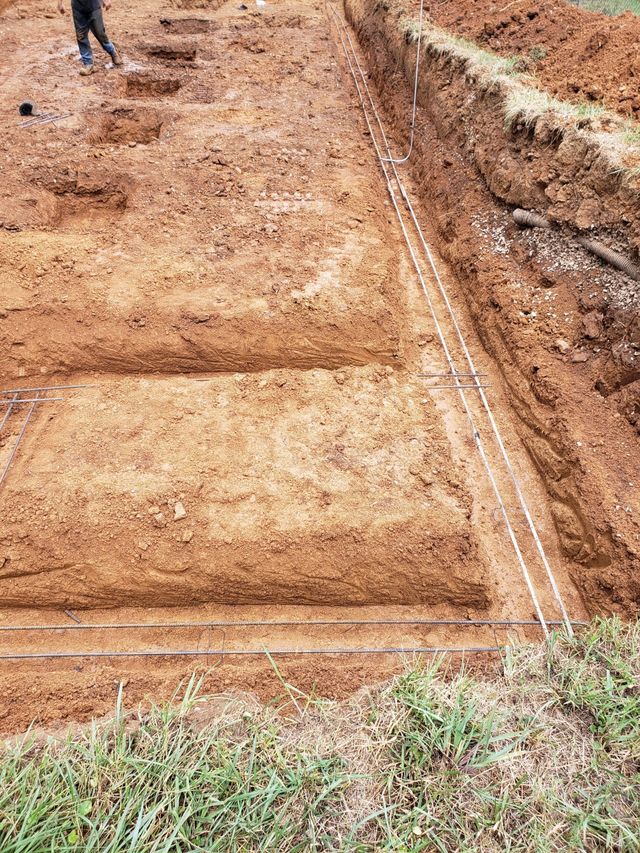
For a typical 3-bedroom residential system on a perked lot, excavation through cover is 2-4 working days. Add a day or two for inspection windows. Bad weather can push the schedule because we cannot trench in saturated soil.
We work with licensed soil scientists and TDEC-certified inspectors for the perk test. If a perk has already been done on the lot, we'll build to it; if not, we'll get one scheduled before the design is final.
A conventional drain field uses gravity to distribute effluent through perforated pipe in stone-bedded trenches. A low-pressure dosing (LPD) system uses a pump and pressurized lateral lines to spread effluent evenly across the field — useful on slow-perking soils. The choice is driven by the perk rate, the slope, and what the regulator approves.
Building sewer lines are typically buried 18-24 inches with frost-protection coverage above. Drain field laterals sit shallower — usually 24-36 inches to the bottom of the trench — so the biology in the topsoil layer can do its work.
No. Compaction over a drain field destroys the air gaps the soil biology needs and crushes the lateral pipe. Drain fields need to stay under vegetated, uncompacted ground.
We focus on installation and replacement. For regular pump-outs we'll refer you to a maintenance specialist in the area.
