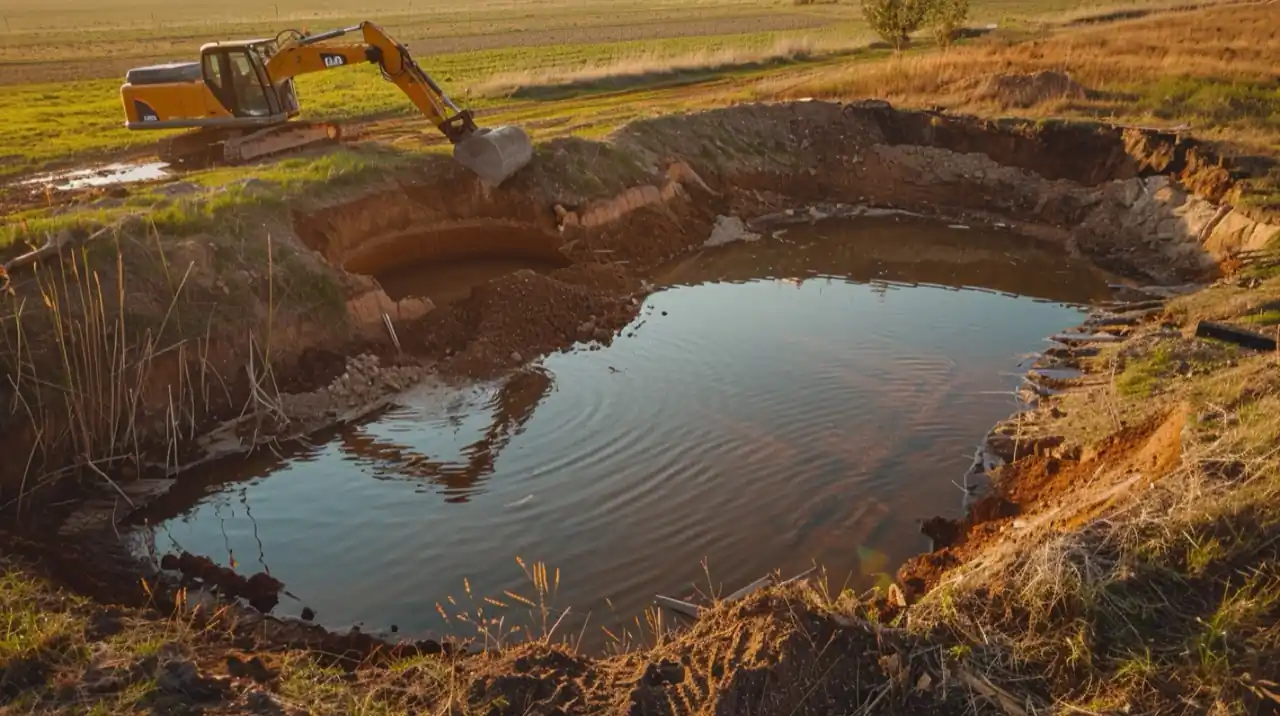
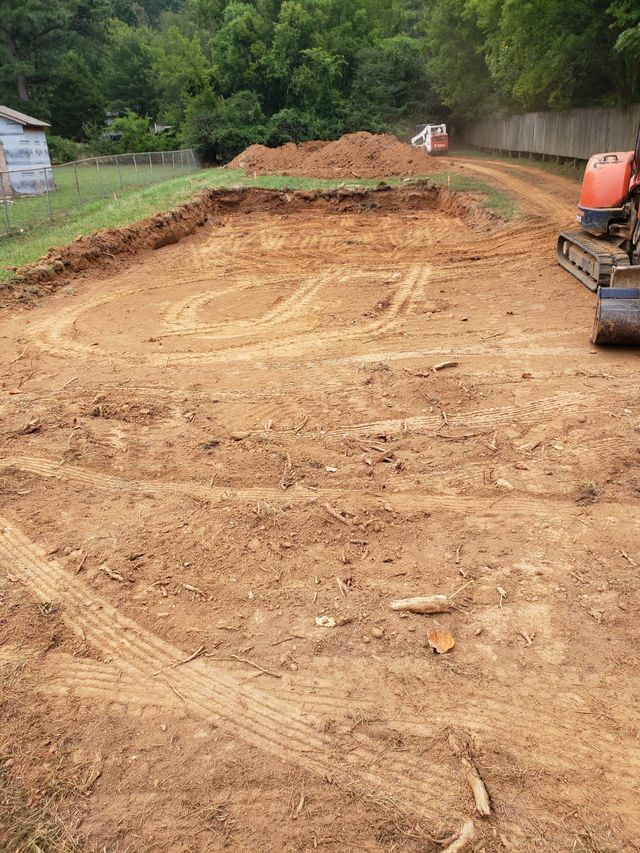
A pond can add beauty, function, and value to a property—but it needs proper planning. The excavation must match the intended use (fishing, livestock, runoff control, aesthetics), and the site must support water retention and safe overflow.
This guide covers the basics of pond planning and excavation.
Ponds often rely on runoff. Understanding where water comes from matters.
Some soils hold water better than others. Clay content is often important for sealing.
Every pond needs a safe path for overflow to prevent damage. (Keep design guidance general; confirm specifics for your site.)
Plan access for mowing, maintenance, and safe edges.
It depends on goals and conditions. Many ponds include varying depths and shelves.
Often yes—slope affects embankment and spoil placement.
Sometimes. Confirm local and state requirements.
