Land Clearing in Greater Chattanooga: What It Includes, What It Costs (and How to Plan)
Land clearing is the first step for most construction and property improvement projects—whether you're building a home pad, opening up a view, installing a driveway, or preparing a commercial site. In the Greater Chattanooga area, land clearing also has to account for steep grades, rocky soil, heavy rain events, and wooded lots.
This guide explains what land clearing involves, how the process works, what affects pricing, and how to prepare your property so the job goes smoothly.
What "land clearing" actually means
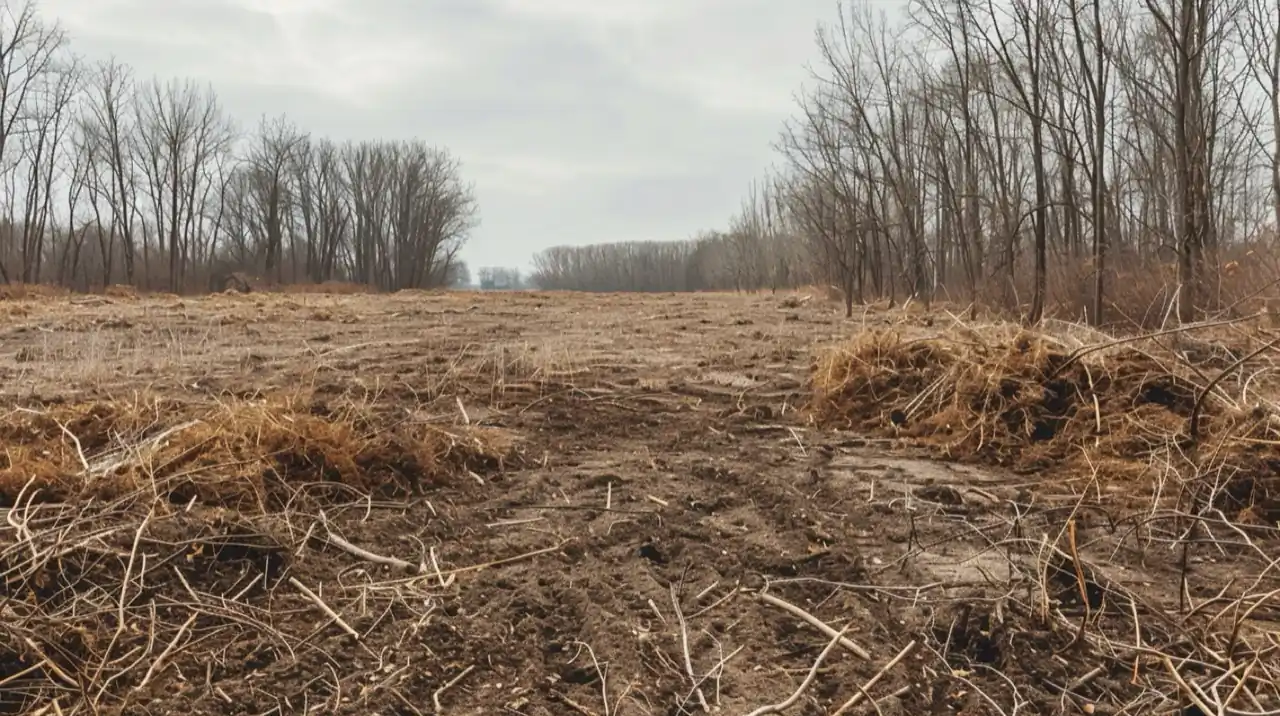
Land clearing is the removal of vegetation and obstacles so a site can be safely and accurately graded and built on. Depending on the property and your goals, clearing may include:
- Brush and undergrowth removal
- Tree removal coordination (or clearing around marked trees)
- Stump removal and root raking
- Removing rocks, debris, and old concrete
- Stripping and stockpiling topsoil
- Rough grading to establish basic drainage and access
- Preparing areas for pads, driveways, footings, or utilities
Common reasons to clear land
1) New construction site prep
Clearing creates access for equipment, room for layout, and a clean surface for grading and compaction.
2) Driveway and access improvements
Clearing provides room for proper width, sight lines, turnarounds, and drainage features.
3) Pond, pad, or retaining wall projects
These projects require both access and space to stage material and manage spoils (excavated soil).
4) Safety and maintenance
Clearing can reduce fire risk, improve visibility, and keep invasive plants from spreading.
Land clearing process (step-by-step)
- Site walk + goal alignment: confirm what areas to clear, what to protect, and where access should be.
- Utility locate: coordinate utility marking before digging.
- Access setup: create a safe entry path for equipment.
- Vegetation removal: brush first, then larger trees/stumps as needed.
- Debris management: chip/mulch, haul off, or stockpile per plan.
- Topsoil management: strip and stockpile usable topsoil if you'll re-spread later.
- Rough grading: shape the site for drainage and the next construction steps.
- Erosion control (as needed): stabilize disturbed areas to reduce runoff and sediment.
What affects land clearing cost?
Land clearing pricing is usually driven by a few big variables:
- Acreage and density: brush vs mature hardwood makes a major difference.
- Stumps and roots: removing stumps/root mats adds time and equipment.
- Slope and access: steep or tight lots take longer and may require specialty handling.
- Rock and soil conditions: rocky ground can slow digging and grading.
- Disposal requirements: hauling or dumping fees can add cost.
- Finish level: "clear only" vs "clear + grade + pad-ready."
How to prepare for a smoother project
- Mark property boundaries and any "keep" trees/areas.
- Decide how you want debris handled (haul, mulch, stockpile).
- Plan for rain: schedule with flexibility if your lot gets soft.
- Confirm where spoils can go (or if hauling is required).
Land clearing vs. grading: what's the difference?
- Clearing removes vegetation and obstacles.
- Grading shapes the soil to create slope, drainage, and building-ready surfaces.
Most projects need both, but the scope varies by end goal.
How to choose a land clearing contractor
Look for a contractor who:
- Explains the plan for access, drainage, and erosion control
- Has the equipment suited for your lot size and density
- Can describe how spoils and topsoil will be handled
- Is clear about what "finished" looks like (rough vs final grade)
Recent work